Failing the Eye Exam: How America's School Vision Screening System Lags Behind the Science
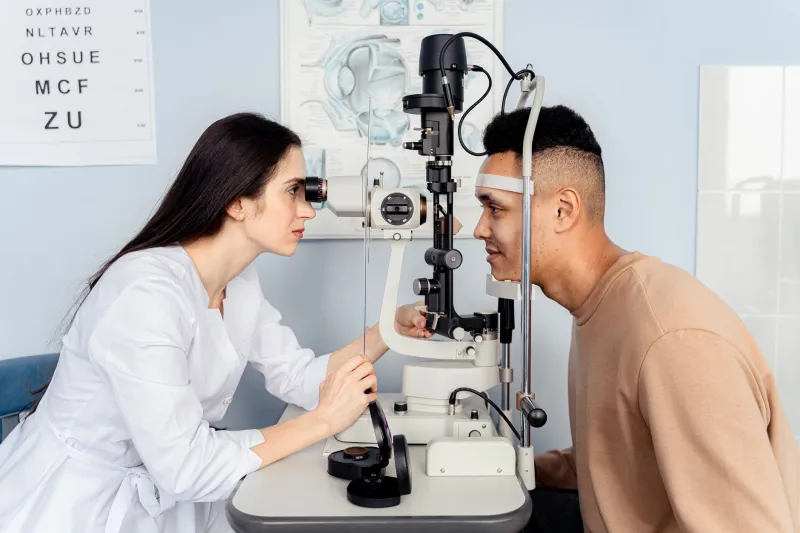
Every autumn, millions of American schoolchildren stand at a marked line on a gymnasium floor and read letters off a wall chart. The Snellen chart, or one of its descendants, has anchored school vision screening for well over a century. For most of that time, clinicians and researchers have known it is insufficient. And yet, in classroom after classroom across the country, that single test—measuring only distance visual acuity—continues to function as the primary, and often sole, method by which children's vision is assessed.
The research literature on this topic is not ambiguous. Studies published across multiple decades consistently demonstrate that distance acuity testing alone fails to detect the majority of vision conditions that impair a child's ability to read, sustain attention, and process visual information in an educational setting. Accommodative insufficiency, convergence insufficiency, oculomotor dysfunction, and uncorrected farsightedness—conditions with well-established links to academic difficulty—routinely escape detection under current protocols. The question researchers and clinicians increasingly ask is not whether the system is broken, but why it remains so.
The Scope of Undetected Visual Impairment in Children
Estimates of the prevalence of undetected, clinically significant vision problems among school-age children in the United States vary by methodology, but the figures are consistently sobering. The American Public Health Association has noted that approximately 25 percent of school-age children have vision problems that affect learning. More targeted studies, including the landmark CLEERE (Collaborative Longitudinal Evaluation of Ethnicity and Refractive Error) study, have documented substantial rates of uncorrected refractive error in pediatric populations, with notable disparities across racial and socioeconomic groups.
Perhaps more consequential than refractive error—which at least has some chance of detection via acuity screening—are the binocular vision disorders. Convergence insufficiency, in which the eyes struggle to work together at near distances, affects an estimated 5 to 13 percent of children and is strongly associated with reading difficulties, eye strain, and avoidance of close work. A child with convergence insufficiency will read 20/20 on a distance chart. Standard school screening will classify that child as having normal vision.
Researchers at institutions including the Ohio State University College of Optometry and the Southern California College of Optometry have long argued that school screening protocols must expand beyond acuity to include tests for accommodation, binocularity, and ocular motility. The evidence base for this expansion is substantial. The clinical and economic arguments for it are compelling. Implementation, however, remains elusive.
What Comprehensive Screening Would Actually Require
The evidence-based standard for identifying vision problems in children does not require ophthalmologic examination of every student—a logistically and financially impractical proposition. What the research supports is a multi-component screening battery that can be administered by trained personnel in a school setting, supplemented by clear referral pathways to licensed eye care providers.
The VISION in Preschoolers (VIP) Study, funded by the National Eye Institute, systematically evaluated the performance of various screening instruments and protocols in young children. Its findings, published in peer-reviewed literature over more than a decade, established that certain photoscreening and autorefractor-based technologies significantly outperform traditional acuity testing in detecting amblyogenic risk factors—those conditions, such as significant refractive error and strabismus, that can lead to permanent vision loss if not addressed during critical developmental windows.
For school-age children, the research supports incorporating assessments of near visual acuity, stereopsis, ocular alignment, and accommodative function. Several validated screening tools exist for each of these domains. Professional organizations including the American Optometric Association and the American Academy of Pediatrics have issued guidelines recommending more comprehensive approaches. The infrastructure gap, however, remains substantial: many school nurses and health aides who conduct screenings have received minimal training in vision assessment beyond the Snellen protocol, and many schools lack the equipment necessary for expanded testing.
The Economic Argument Science Has Already Made
The financial case for improving school vision screening is, by any reasonable measure, already closed. Research from the Deloitte Access Economics group, commissioned by Prevent Blindness, estimated that the total economic burden of vision loss and eye disorders in the United States—including lost productivity, diminished educational attainment, and direct health care costs—runs into the hundreds of billions of dollars annually. While not all of this burden originates in childhood, a significant portion traces back to conditions that were either undetected or inadequately treated during school years.
A 2016 analysis published in JAMA Ophthalmology examined the cost-effectiveness of preschool vision screening and found that universal, evidence-based screening programs produced substantial returns through the prevention of amblyopia and its associated lifetime productivity losses. For school-age children, the calculus is similar: early identification of binocular vision disorders and referral for appropriate treatment has been shown to improve reading fluency and academic performance in randomized controlled trials, most notably the Convergence Insufficiency Treatment Trial (CITT), which demonstrated that office-based vision therapy produced significantly better outcomes than home-based pencil pushups—findings with direct implications for how schools and health systems should be directing referrals.
Why the Gap Persists
Vision scientists and public health researchers offer several intersecting explanations for why evidence-based screening recommendations have not been translated into widespread practice. Fragmented governance is among the most frequently cited. School health policy in the United States is determined at the state level, and state-level vision screening mandates vary enormously in scope, frequency, and enforcement. Some states require only a single screening in a child's entire school career. Others mandate annual screening but specify no particular protocol beyond basic acuity. A handful have adopted more progressive standards, but they remain the exception.
Professional jurisdictional disputes also complicate the landscape. Tensions between optometry and ophthalmology over scope of practice, referral patterns, and advocacy priorities have at times obscured the shared scientific consensus on what children need. Meanwhile, the education sector—which bears the academic consequences of undetected vision problems—has limited structural connection to the eye care community and limited authority to mandate health interventions.
Researchers also point to a persistent cultural conflation of vision with visual acuity. In the public imagination, and in much of school health policy, "good vision" means the ability to read a chart at twenty feet. The more complex reality—that functional vision encompasses a range of binocular, accommodative, and oculomotor skills that are not assessed by acuity testing—has not penetrated mainstream educational or public health discourse with anything approaching the force that the scientific evidence warrants.
A Path Forward Grounded in Evidence
The contours of a more effective national approach are visible in both the research literature and in the practices of states and school districts that have moved beyond minimum standards. Comprehensive, multi-component screening batteries administered by adequately trained personnel, paired with robust referral and follow-up systems, represent the evidence-based standard. Photoscreening technology, now widely validated and increasingly affordable, offers a scalable solution for younger children. Expanded training for school health professionals, informed by current clinical science, is achievable within existing educational infrastructure.
What has been lacking is not knowledge. The science of what children's eyes need, and how to assess whether those needs are being met, is well established. What has been lacking is the institutional will to align public health policy with that knowledge—and the recognition that the children sitting in classrooms today, squinting at whiteboards or avoiding near work entirely, are paying the cost of that misalignment.