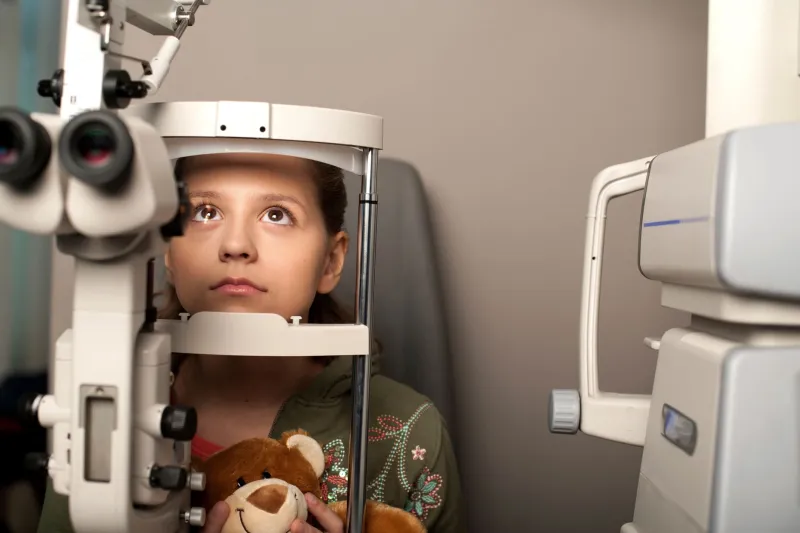
Focusing on the Wrong Problem: The Vergence-Accommodation Conflict and the Neurophysiological Limits of Virtual Reality
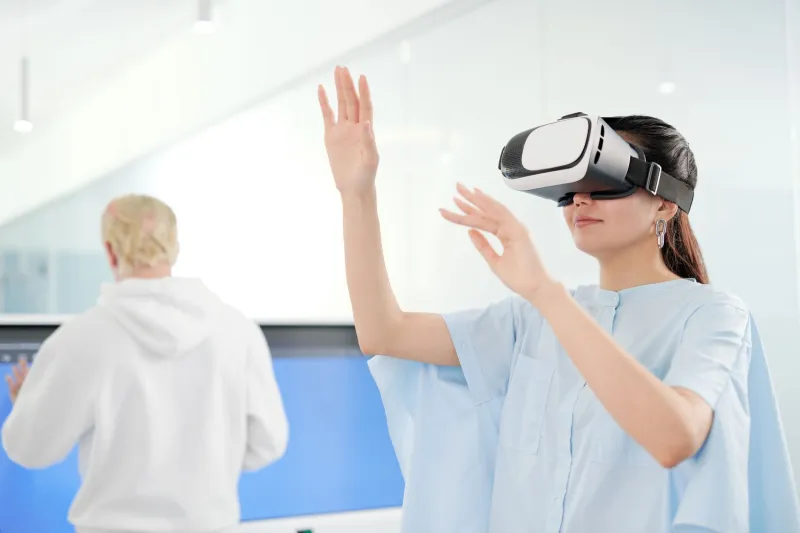
For decades, the popular imagination has anticipated a future in which digital environments become perceptually indistinguishable from physical reality. Head-mounted displays have grown lighter, resolutions have climbed toward retinal density, and refresh rates now comfortably exceed the threshold for perceived motion continuity. And yet, even the most sophisticated consumer headsets on the market today—devices manufactured by companies with billion-dollar research budgets—routinely produce headaches, eye strain, and nausea in a significant proportion of users after relatively brief sessions. The culprit is not processing power, pixel density, or latency alone. It is a conflict embedded in the basic architecture of human binocular vision, one that current display technology is structurally ill-equipped to resolve.
That conflict has a precise clinical name: the vergence-accommodation conflict, or VAC. Understanding it requires a brief detour into the mechanics of how healthy eyes process depth in the natural world.
How the Visual System Normally Triangulates Depth
In ordinary three-dimensional environments, the human visual system relies on two coupled mechanisms to bring objects into sharp, unified focus. Vergence refers to the inward or outward rotation of the two eyes relative to each other, a process that allows both foveas to point simultaneously at the same object regardless of its distance. When you shift your gaze from a coffee mug on your desk to a window across the room, your eyes diverge; when you return attention to the mug, they converge. This rotational adjustment is controlled largely by the extraocular muscles and is mediated by brainstem circuits that operate with remarkable speed and precision.
Accommodation, by contrast, refers to the ciliary muscle-driven change in the curvature of the crystalline lens inside each eye. As a target moves closer, the lens thickens to increase its refractive power, maintaining a sharp image on the retina. As the target recedes, the lens flattens. Under natural viewing conditions, vergence and accommodation are neurologically coupled—they occur together, in coordinated proportion, through a reflex loop that vision scientists refer to as the near triad (which also includes pupillary constriction). The brain expects these two signals to match, and in the physical world, they essentially always do.
What Stereoscopic Displays Actually Deliver
Stereoscopic virtual reality headsets work by presenting each eye with a slightly different flat image, separated by a carefully calculated horizontal disparity that mimics the parallax difference a real three-dimensional scene would produce. The visual cortex interprets this disparity as depth, generating a convincing perception of objects existing at various distances. The vergence response is engaged: the eyes rotate appropriately toward the perceived location of the virtual object.
Here is where the conflict arises. Both images are displayed on a flat screen—or, in most current headsets, on a screen positioned at a fixed optical distance from the eye, typically somewhere between 1.2 and 2 meters in vergence-equivalent terms. Regardless of where a virtual object appears to be located in depth, the eyes must always accommodate to that fixed screen distance. The lens curvature appropriate for a virtual object appearing two feet away is simply not the lens curvature that brings a screen two meters away into sharp focus. The brain receives vergence signals indicating one depth and accommodation signals indicating another. This mismatch—sometimes only a fraction of a diopter, sometimes considerably more depending on the depicted scene—is the vergence-accommodation conflict.
The Physiological and Perceptual Consequences
Research published over the past decade has substantially clarified the downstream effects of sustained VAC exposure. Studies conducted at institutions including the University of California, Berkeley and MIT's Media Lab have documented measurable increases in blink rate, reductions in fusional reserve, and elevated subjective discomfort scores following VAC-laden display use, even in sessions as short as twenty minutes. A 2022 study in Investigative Ophthalmology & Visual Science found that VAC magnitude correlated significantly with both the severity of reported cybersickness symptoms and objective measures of oculomotor fatigue assessed via infrared eye-tracking.
The neurological underpinning of this discomfort remains an active area of investigation. The dominant hypothesis holds that the brain's inability to reconcile conflicting depth cues triggers a low-level error signal in circuits responsible for sensorimotor calibration—circuits that, under normal ecological conditions, would interpret such a mismatch as a sign of visual system dysfunction or environmental anomaly. Some researchers have drawn an analogy to motion sickness, proposing that the discomfort arises from a conflict between expected and received sensory predictions, a framework consistent with predictive coding models of perception. Others emphasize peripheral suppression mechanisms, noting that users often unconsciously reduce accommodative effort over time, essentially learning to ignore the blur cue—a form of neural adaptation that may carry its own long-term implications.
Engineering Responses: A Field in Rapid Flux
The optical engineering community has responded to the VAC problem with considerable ingenuity, though no approach has yet achieved commercial viability at scale. Light-field displays, which reproduce the full angular distribution of light rays from a virtual scene rather than simple stereoscopic pairs, theoretically provide correct focus cues at every depicted depth. Prototype systems from Stanford's Computational Imaging Group and others have demonstrated meaningful VAC reduction in laboratory settings, though the computational demands remain formidable and miniaturization poses significant challenges.
Varifocal displays represent an alternative approach, using actuated lenses or deformable mirrors to dynamically shift the focal plane of the display in synchrony with gaze direction, as tracked in real time by embedded eye-tracking hardware. Apple's Vision Pro headset, released in 2024, incorporates eye-tracking infrastructure that some analysts have suggested is partly intended to support future varifocal implementations, though current software does not exploit this capability for VAC mitigation. Holographic waveguide optics, being developed by several defense contractors and consumer technology firms, offer yet another pathway, encoding depth-correct focus cues through interference patterns rather than conventional lens systems.
Neural Adaptation and the Question of Long-Term Exposure
Perhaps the most underexplored dimension of VAC research concerns not engineering solutions but biological ones. A growing body of evidence suggests that the visual system possesses some capacity to recalibrate its vergence-accommodation coupling in response to sustained atypical input. Studies using prism adaptation paradigms have demonstrated that the near triad is more plastic than classical models implied, with measurable shifts in coupling ratios observable after relatively brief exposure periods. Whether this plasticity represents a benign compensatory mechanism or a potentially maladaptive recalibration—one that might, for instance, impair natural vision performance following extended headset use—remains an open and pressing question.
Researchers at the University of Washington's I-LABS and several European institutions are currently conducting longitudinal studies examining oculomotor metrics in populations with high VR exposure, including military personnel using headset-based training systems and clinical patients receiving VR-assisted rehabilitation. Preliminary data presented at the 2023 Association for Research in Vision and Ophthalmology annual meeting suggested detectable but reversible shifts in accommodative response curves following intensive VAC exposure, findings that warrant replication and longer follow-up windows.
The Path Forward
The vergence-accommodation conflict is not merely a technical inconvenience. It is a window into the fundamental constraints that evolutionary visual neuroscience places on the design of perceptual interfaces. Every proposed solution—whether optical, computational, or adaptive—must ultimately satisfy a visual system shaped by millions of years of experience with a world in which vergence and accommodation never disagree. Closing that gap will require not only better hardware but a more granular understanding of how the human brain negotiates conflicting sensory evidence, updates its internal models, and decides what to believe about the geometry of the world it inhabits.
For vision scientists, that challenge is not a limitation. It is an invitation.