When the Brain Stops Anticipating: Predictive Vision Failure in the Aging Nervous System

The eye does not see. That assertion, familiar to vision scientists but often counterintuitive to the general public, carries profound implications for how we understand visual aging. Photoreceptors transduce light; the retina performs initial signal processing; but the visual experience — the coherent, stable, meaningful perception of a scene — is constructed upstream, in the cortex, through a process that is as much about expectation as it is about incoming data.
Predictive coding theory, now among the most influential frameworks in systems neuroscience, proposes that the brain is fundamentally a prediction engine. Rather than passively receiving sensory signals and interpreting them post-hoc, the visual cortex continuously generates forward models of expected input, compares those predictions against actual sensory data, and updates its internal representations based on the discrepancy — the prediction error. Under this framework, what we perceive at any given moment is not the raw sensory signal but the brain's best guess about the world, refined by a lifetime of statistical learning.
Aging disrupts this process in ways that are only beginning to be systematically characterized, and the consequences extend well beyond blurry vision.
The Architecture of Anticipatory Vision
Predictive coding in the visual system operates across multiple timescales and organizational levels. At the level of the primary visual cortex, neurons respond most vigorously not to expected stimuli but to violations of expectation — the signal that something in the environment does not match the current model. Higher cortical areas, including regions in the parietal and prefrontal cortex, maintain more abstract predictive representations that govern spatial attention, motion anticipation, and scene gating.
This architecture is metabolically efficient precisely because it suppresses redundant processing of predicted inputs. It is also, however, deeply dependent on the integrity of the neural machinery that maintains and updates those predictions — the precision-weighting mechanisms that determine how much confidence to assign to sensory data versus prior expectation, and the temporal processing systems that keep predictions synchronized with a world that moves through time.
In the aging brain, both of these systems show measurable degradation. Reduced white matter integrity slows the conduction velocity of the feedback signals that carry predictive information from higher to lower cortical areas. Diminished GABAergic inhibition disrupts the precision of error signaling. Reduced dopaminergic function — a neurotransmitter implicated in the updating of internal models — further compromises the brain's ability to revise predictions in response to environmental change.
Beyond Acuity: What Predictive Failure Actually Looks Like
The clinical consequences of predictive coding disruption in older adults are not primarily experienced as blurriness. They manifest instead as difficulty in dynamic, complex, or unpredictable visual environments — the situations in which the predictive system bears the heaviest load.
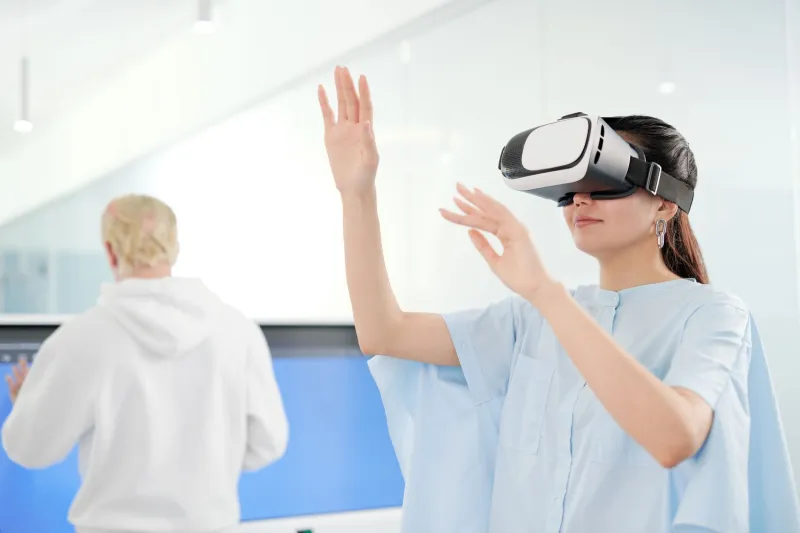
Falls represent the most consequential downstream effect. Research consistently implicates visual processing deficits beyond simple acuity loss in fall risk among older Americans, a population for which falls represent a leading cause of injury-related mortality. Studies employing virtual reality environments to probe visual-motor coordination have found that older adults demonstrate disproportionate difficulty when visual scene statistics deviate from expectation — when floors are patterned rather than uniform, when lighting is uneven, or when the visual environment contains competing motion signals. These are precisely the conditions that stress the predictive system most severely.
Driving presents a parallel challenge. Older drivers with objectively adequate acuity and contrast sensitivity still demonstrate elevated crash risk under conditions of high perceptual complexity — intersections with multiple competing motion signals, nighttime driving with unpredictable headlight glare, or highway merging scenarios. Eye-tracking and neuroimaging data suggest that these individuals are slower to generate accurate spatial predictions and slower to update them when the environment changes, even when they can clearly resolve the relevant visual features.
The experience of visual crowding — difficulty distinguishing targets in the presence of flanking distractors — also worsens with age in ways that track with predictive processing capacity rather than optical resolution. This has particular relevance for reading and face recognition, two tasks that rely heavily on the brain's ability to use contextual expectations to efficiently parse ambiguous local signals.
Emerging Interventions Targeting the Predictive System
If predictive coding failure is a meaningful contributor to age-related visual decline, then interventions targeting the predictive system — rather than, or in addition to, the optical one — deserve serious research attention. Several lines of investigation are currently active.
Perceptual learning paradigms, in which older adults undergo structured training on visual discrimination tasks, have demonstrated transfer effects that extend beyond the trained stimuli — a signature consistent with modification of higher-level predictive representations rather than simple sensory adaptation. The challenge for translational research is designing training protocols that efficiently update the statistical models most relevant to real-world visual demands, such as those encountered during ambulation or driving.
Non-invasive brain stimulation — including transcranial direct current stimulation targeted at visual cortex and associated parietal regions — has shown preliminary efficacy in enhancing prediction-error signaling in older adults in controlled laboratory settings. These findings are intriguing but require replication and considerable methodological refinement before they approach clinical applicability.
Perhaps most practically promising is the development of augmented reality systems designed to compensate for predictive deficits by providing external cueing that substitutes for degraded internal prediction. Rather than simply magnifying or brightening the visual scene, these systems could highlight task-relevant features, flag unexpected environmental changes, or temporally pre-cue motion events — in effect, offloading predictive computation from a compromised cortex to an external processor.
A Call for Reframed Diagnostics
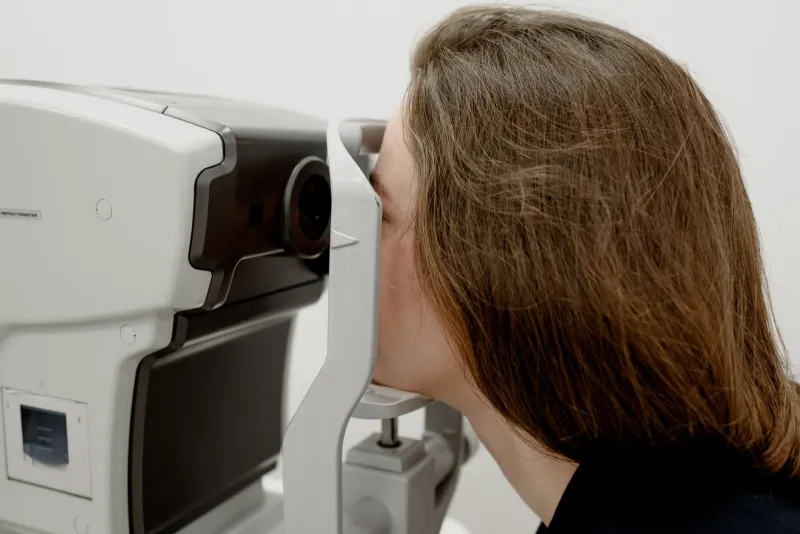
The clinical assessment of visual aging in the United States remains anchored in the Snellen chart and its derivatives — instruments designed to measure optical resolution under ideal conditions. These tools capture one dimension of visual function with reasonable fidelity. They are largely blind, however, to the predictive dimension of vision that neuroscience now recognizes as central to real-world visual performance.
Developing validated clinical measures of predictive processing capacity in older adults — tools that are practical, affordable, and interpretable outside the research laboratory — represents one of the more significant unmet needs in vision gerontology. Until such measures exist, the field will continue to underestimate the true scope of age-related visual decline and to underprescribe the interventions best suited to address it.